Happiness Is a Group Sport: Why Sharing Joy Makes It Hit Harder
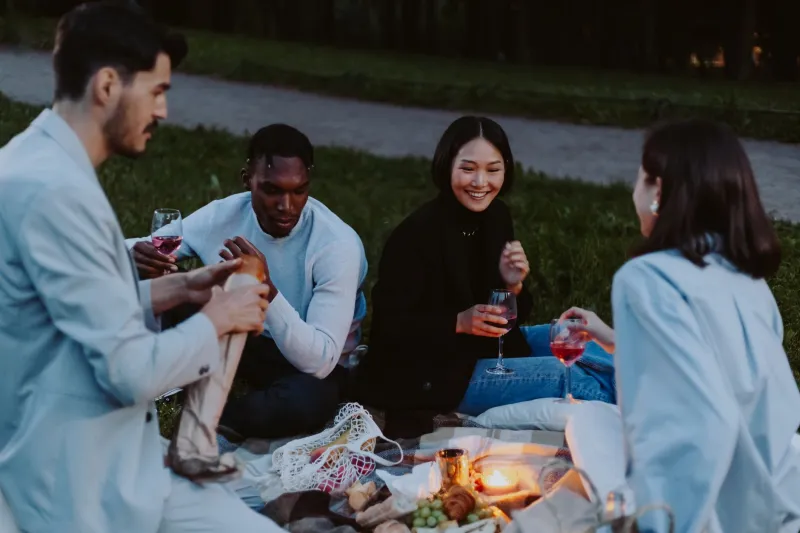
Think about the happiest moments of your life. Not the quietly-satisfied ones, but the electric ones — the kind that still make you smile years later. Chances are, most of them had other people in them.
There's a reason for that. And it goes a lot deeper than just "company is nice."
Researchers studying the neuroscience of happiness have been quietly building a case for something that feels intuitively true but is actually backed by some fascinating brain science: shared joy doesn't just add to your happiness, it multiplies it. The experience of celebrating someone else's win, laughing at a joke only your friend group would understand, or watching a crowd of strangers cheer together at a concert does something to your brain that scrolling through a highlight reel alone simply cannot replicate.
Welcome to what we're calling the Joy Multiplier Effect — and once you understand how it works, you'll want to design your whole social life around it.
What's Actually Happening in Your Brain
When you experience something joyful alongside another person, your brain doesn't just process the pleasure of the event itself. It layers on an additional reward: the pleasure of connection.
Oxytocin — sometimes called the bonding hormone — surges during shared positive experiences. This is the same chemical that spikes during deep conversation, physical affection, and moments of trust. When joy and oxytocin show up together, the emotional memory of that moment gets encoded more deeply and lasts longer than a solo experience of comparable intensity.
There's also the phenomenon of emotional contagion — the well-documented tendency for human beings to literally catch each other's feelings. Mirror neurons in the brain activate when we observe someone else experiencing joy, triggering a version of that same emotion in ourselves. This is why watching someone open a gift they love feels almost as satisfying as opening one yourself. You're not imagining their happiness. You're partially experiencing it.
And then there's what psychologists call capitalization — the act of sharing good news or positive experiences with others. Studies from the University of California, Santa Barbara found that sharing a positive event with someone who responds enthusiastically doesn't just feel good; it actually amplifies the positive emotion beyond what the original event alone produced. The conversation about the good thing becomes part of the good thing.
Inside Jokes, Rituals, and the Glue of Shared Experience
Every close friend group, tight-knit family, or longtime couple has them: references that mean nothing to outsiders but send the inner circle into immediate hysterics. These aren't just fun quirks. They're neurological infrastructure.
Shared experiences — especially funny, joyful, or surprising ones — create what researchers call collective memory, a kind of group-owned emotional archive. Each time you reference one of these moments, you're not just recalling it; you're re-experiencing a compressed version of the original joy and reinforcing the bond that was built around it.
Families who build annual traditions around joy — the same goofy Thanksgiving game, the summer road trip playlist, the birthday breakfast-in-bed ritual — are essentially designing a system for compounding happiness over time. Every new experience adds to the archive. Every callback to an old one pays dividends.
This is also why communities built around shared enthusiasm — whether that's a local running club, a fantasy football league, a church choir, or a fandom — often generate levels of belonging and happiness that feel disproportionate to the activity itself. It's not really about the running or the football. It's about the shared emotional landscape that gets built through repeated, joyful experience together.
Real People, Real Multiplier Effects
In Nashville, a group of coworkers started a "Good News Friday" Slack channel during the pandemic, where team members shared one genuinely positive thing from their week — a personal win, a funny moment, something that made them feel good. What started as a morale experiment became a cornerstone of the team culture. Members report that the act of finding something good to share made them more attentive to joy throughout the week, not just on Fridays.
In Portland, a neighborhood block threw its first-ever progressive dinner — everyone cooking one course, moving house to house through the evening — and accidentally created what one resident described as "the best night we've had in years." They've done it four times since. "It's not even about the food," she said. "It's about having a reason to be genuinely happy together."
These aren't anomalies. They're examples of people stumbling into something researchers have been documenting for years: intentionally designed shared joy produces more happiness than the same amount of individual joy experienced separately.
How to Foster the Multiplier Effect in Your Own Life
You don't need a community overhaul or a perfectly curated social life to start experiencing this. Here are some genuinely practical entry points:
Celebrate other people's wins like they're your own. When a friend gets the job, the relationship, the creative breakthrough — go all in on the celebration. Your enthusiasm isn't performative; it's neurologically generative for both of you.
Create recurring rituals, however small. A weekly phone call with a sibling, a monthly dinner with your closest friends, a standing movie night — repetition is what transforms a fun event into a shared tradition. The magic is in the return.
Share the good stuff out loud. Resist the habit of keeping positive experiences private. Text the funny moment to the group chat. Tell your partner about the thing that made your day. Capitalization only works when you actually share.
Build inside references on purpose. Say yes to the weird, memorable experiences — the ones that are likely to become stories. Those are the moments that become the language of your closest relationships.
Seek out collective experiences. Live music, sporting events, group fitness classes, comedy shows — there's a reason these feel different from watching the same thing alone. Let yourself be part of the crowd sometimes.
The Takeaway
Joy was never really meant to be a solo activity. Your brain is literally wired to feel more of it when you're in the presence of other people who are feeling it too. The best news? You don't have to wait for the perfect moment or the perfect group. You can start building the conditions for shared joy right now, with the people already in your life.
Pass the happiness around. Watch what happens to yours.