Time Travel for Your Mood: How Looking Back Can Launch You Forward
Somewhere on your phone right now, there's a photo that could make you feel better in about thirty seconds. Maybe it's from a road trip you took in your twenties. Maybe it's a picture of a dog you loved. Maybe it's a screenshot of a text conversation that made you laugh until you cried.
You probably scroll past it without thinking. But that image is doing something to your brain whether you engage with it or not — and if you actually stopped and let yourself feel it, you might be sitting on one of the most accessible joy tools available to you.
Nostalgia has a complicated reputation. Pop culture treats it as either charming sentimentality or a red flag — a sign that you're living in the past, unable to move forward, romanticizing things that weren't actually that great. But the science tells a very different story. And once you understand it, you might start treating your memories less like a rearview mirror and more like a renewable energy source.
Nostalgia Is Not What You Think It Is
The word itself has dark origins. It was coined in the 17th century by a Swiss physician to describe what he believed was a dangerous medical condition — a debilitating homesickness that could, he thought, prove fatal. For centuries, nostalgia was classified as a form of neurosis, a pathological longing that indicated psychological weakness.
Modern psychology has done a full 180.
Dr. Constantine Sedikides at the University of Southampton has spent decades studying nostalgia and its effects on wellbeing. His research consistently finds that nostalgic experiences — thinking about meaningful past events, revisiting cherished memories — increase feelings of social connectedness, boost self-continuity (the sense that you are a coherent person with a meaningful story), and actually elevate mood in measurable ways.
In one study, participants who were induced to feel nostalgic reported feeling warmer, more optimistic about the future, and more connected to the people around them compared to control groups. Nostalgia, it turns out, doesn't pull you away from the present. When used well, it anchors you in it.
Other research has found that nostalgia can buffer against loneliness, reduce existential anxiety, and even increase a person's sense of meaning in life. This isn't niche academic trivia. It's a significant finding about a mental state most of us stumble into accidentally a few times a year.
What if you did it on purpose?
The Difference Between Healthy Nostalgia and Getting Stuck
Before we go further, let's address the elephant in the room: yes, nostalgia can tip into something less healthy. If reminiscing consistently leaves you feeling like the best of your life is behind you — if it generates grief rather than warmth, or becomes a way of avoiding your present circumstances — that's worth paying attention to.
But that version of nostalgia is the exception, not the rule. And the distinction often comes down to how you engage with your memories, not the act of engaging itself.
Healthy nostalgia is characterized by what psychologists call "redemptive framing" — you remember the past as something that shaped you, informed you, and connects to who you are now. You're visiting, not moving back in.
Unhealthy nostalgia tends to be comparative — "things were better then, and now is worse" — and leaves you feeling diminished rather than enriched.
The goal is the former. And it's a skill you can actually develop.
Your Personal Joy Archive: What's in There?
Most people have more raw nostalgia material than they realize. Think about what's sitting in your world right now:
Old playlists. Music is one of the most powerful nostalgia triggers because it's processed through the same brain regions associated with emotion and autobiographical memory. A song from high school doesn't just remind you of that time — it can return you to it, briefly and vividly, in a way that few other stimuli can match. Spotify's "On Repeat" archive, old CD cases in your parents' basement, or a YouTube search for the soundtrack of your college years can unlock something genuinely powerful.
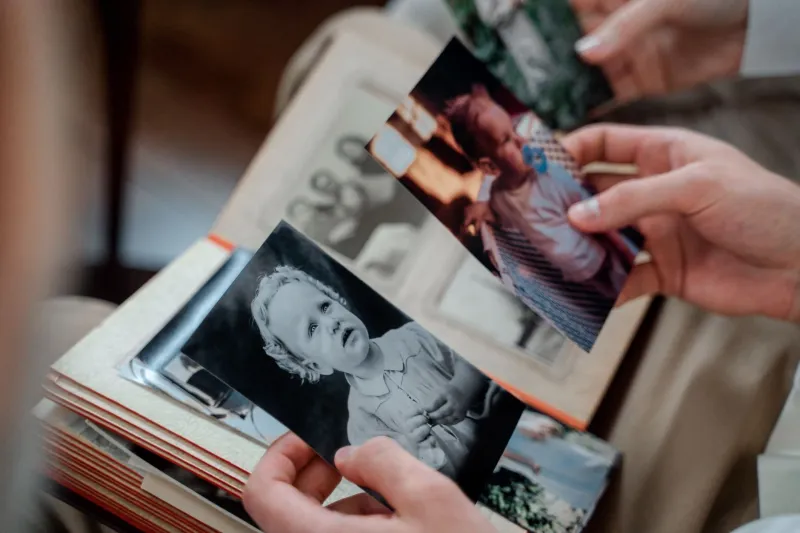
Photo albums — physical and digital. The act of sitting with photographs (rather than scrolling past them) is different. It invites reflection. It lets you really look at the person you were, the people you loved, the places you inhabited. Apps like Google Photos' "Memories" feature or Timehop exist precisely because tech companies figured out that people respond emotionally to this kind of temporal reflection.
Old letters, journals, and even texts. Reading something you wrote five or ten years ago is a strange and often moving experience. You see how much you've grown. You're reminded of concerns that resolved themselves, of joys you'd forgotten, of a version of yourself that was doing the best they could with what they had.
Reconnecting with people from your past. Research from University of Chicago professor Nicholas Epley found that people consistently underestimate how much others enjoy hearing from them after a long absence. Reaching out to an old friend isn't awkward — it's usually deeply welcome on both ends. And the conversation that follows almost always involves shared reminiscing, which amplifies the joy for both parties.
How to Use Nostalgia Intentionally (Without Overdoing It)
The key word here is intentional. Nostalgia that happens to you randomly can be hit or miss. Nostalgia you create deliberately tends to be richer and more reliably positive.
Schedule a "throwback session" once a month. This sounds almost absurdly simple, but setting aside 20-30 minutes to deliberately revisit a chapter of your past — through photos, music, or journaling — is meaningfully different from the occasional accidental scroll. Make it a ritual. Light a candle. Put your phone down (except for the photos). Let yourself actually feel it.
Create a "joy archive." Start collecting, in one place, the things that reliably make you feel nostalgic warmth. A playlist. A folder of photos. A notes document with memories you want to preserve. This isn't just sentimental hoarding — it's building a resource you can return to when you need a mood lift that doesn't require caffeine or a credit card.
Write the story forward. After a nostalgia session, try journaling briefly about how that past experience connects to your present. What did you learn? How did it shape you? What do you appreciate now because of it? This "narrative bridging" is the move that turns nostalgia from a backward glance into a source of present-day meaning.
Share it. Call someone from that era of your life. Post the throwback photo (yes, really). Tell a story at dinner about something that happened years ago. Shared nostalgia is exponentially more powerful than private nostalgia — it reinforces bonds, creates mutual joy, and reminds both people that they have a shared history worth celebrating.
The Past Is Part of Your Happiness Portfolio
We spend a lot of time and energy chasing new experiences, new feelings, new sources of joy. And that pursuit is worthwhile. But there's an entire library of happiness already written inside you — experiences you've lived, connections you've made, versions of yourself you've been.
That library doesn't expire. It doesn't require a subscription. And it's available to you any time you're willing to crack it open.
Your past isn't something to escape or overcome. It's one of the richest chapters of your ongoing story — and revisiting it, with intention and warmth, might be one of the most underrated ways to feel genuinely, sustainably good right now.