Doing Less on Purpose: The Quiet Rebellion Making Young Americans Happier
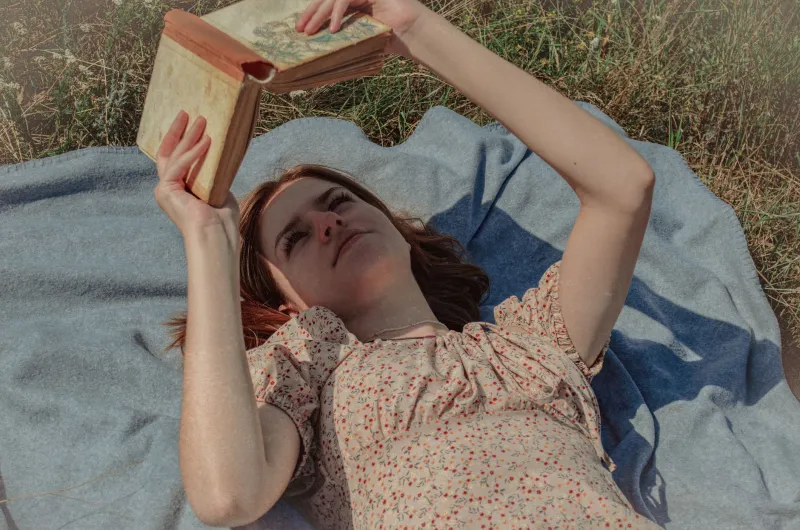
Scroll through TikTok for five minutes and you'll find two completely opposing worlds existing side by side. On one side: hustle content, productivity hacks, "5 AM routines that changed my life." On the other: people filming themselves doing absolutely nothing. Sitting in a garden. Watching rain hit a window. Reading a physical book with no background noise.
The second kind is winning.
Not in views necessarily — though it's doing fine there too — but in something harder to measure: the actual well-being of the people living it. Across the US, a quiet but unmistakable cultural shift is underway. Younger Americans, the generations most associated with screens and speed and always-on connectivity, are deliberately slowing down. And the data, the psychology, and the stories behind this trend all point to the same surprising conclusion: boredom might be one of the most underrated tools for genuine happiness we have.
The Overstimulation Hangover
Let's be honest about where we've been. The 2010s were a decade of relentless stimulation. Smartphones became appendages. Streaming gave us infinite content. Social media turned comparison into a 24/7 sport. The gig economy rebranded exhaustion as ambition. By the early 2020s, a significant chunk of Millennials and Gen Z were reporting record levels of anxiety, burnout, and what many described simply as feeling "fried."
The American Psychological Association's annual Stress in America report has consistently shown younger adults carrying some of the highest stress loads in the country — higher, in many categories, than older generations. And while the causes are complex and systemic, researchers began pointing to something that often gets overlooked: the sheer cognitive load of never being bored.
Your brain needs downtime. Not just sleep — actual idle time, where nothing in particular is demanded of it. Without that, the prefrontal cortex, the part responsible for decision-making, emotional regulation, and creativity, gets depleted. The result isn't just tiredness. It's a kind of emotional flatness, a gray zone where nothing feels especially good or bad, just... numbing.
Enter the Boredom Renaissance
Something shifted around 2022 and has only gathered momentum since. "Slow living" content exploded on social platforms. "Cottagecore" aesthetics gave way to genuine lifestyle changes. "Bed rotting" — lying in bed doing nothing, guilt-free — became a Gen Z term that went mainstream not because it was lazy, but because it resonated with something real: the radical act of simply not performing productivity for a few hours.
Jamila, 26, a graphic designer in Austin, Texas, describes it this way: "I used to fill every gap in my day with a podcast, a show, a scroll. I was terrified of silence. Then one afternoon my phone died and I just... sat in my backyard for an hour. I noticed things I hadn't seen in years. The way the light changed. A bird I couldn't name. I felt genuinely calm for the first time in months."
Her experience isn't unusual. Marcus, 31, a teacher in Philadelphia, started what he calls "analog Sundays" — no screens, no plans, no productivity. "I thought I'd be bored out of my mind," he laughs. "The first few times I kind of was. But then something loosened up. I started sketching again. I called my grandmother. I actually cooked a real meal. It felt like I'd found a room in my own life that I'd forgotten existed."
The Psychology of Why Less Works
Psychologists have been studying boredom seriously for about a decade now, and the findings consistently challenge our cultural assumption that it's something to be eliminated. Dr. Sandi Mann at the University of Central Lancashire has found that boredom actually triggers a shift in brain activity that enhances daydreaming — and daydreaming, it turns out, is where the brain does some of its most important work. Problem-solving, emotional processing, creativity, and self-reflection all get a workout when the mind is allowed to wander without a destination.
There's also something happening at the neurochemical level. Constant stimulation — notifications, rapid content, task-switching — keeps the nervous system in a low-grade alert state. Cortisol stays slightly elevated. The parasympathetic nervous system, the "rest and digest" counterpart to fight-or-flight, rarely gets to do its job. Intentional boredom and slower-paced activities help reset that balance, allowing the body to actually recover rather than just power down between stimulation hits.
And then there's what psychologists call "intrinsic motivation" — the kind of engagement that comes from within, rather than from external rewards or stimulation. Activities that are slightly boring, or at least unspectacular, tend to be where intrinsic motivation thrives. Gardening. Knitting. Cooking from scratch. Journaling. None of these are particularly exciting. All of them consistently show up in well-being research as sources of genuine satisfaction.
How to Actually Do This (Without Feeling Like You're Failing)
The irony of the slow living trend is that it can become its own form of pressure — another thing to optimize, curate, and perform. The point isn't to turn boredom into an aesthetic or a brand. It's to genuinely give yourself permission to be unstimulated without immediately reaching for a fix.
Here are a few low-stakes ways to start:
Start with 20 minutes. You don't need a whole "analog day." Just try one pocket of unscheduled, screen-free time per day and see what happens. Resist the urge to fill it.
Pick one genuinely unglamorous hobby. Not one that looks good on Instagram. One that you actually find absorbing in a quiet way — puzzles, bird watching, baking bread, rearranging a bookshelf. The more low-key, the better.
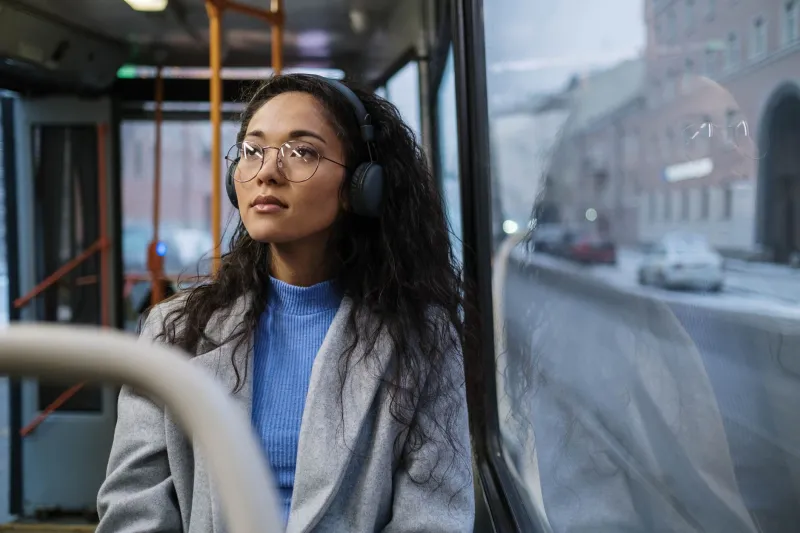
Let yourself be bored in transition moments. Waiting in line? Sit with it. Commuting? Look out the window. These small doses of unstimulated time add up.
Notice the guilt and let it pass. A lot of us have internalized the message that idle time is wasted time. That belief is worth examining. Rest isn't a reward for productivity — it's a basic requirement for a functioning human brain.
The Joy That's Already There
What the boredom renaissance is really about, underneath all the aesthetic trimmings, is something pretty simple: trusting that your own unmediated experience is worth having. That you don't need a constant stream of external input to feel alive and engaged and happy.
For generations raised in the age of infinite content, that's actually a radical idea. And judging by how many young Americans are quietly, deliberately choosing it — it might also be exactly the kind of joy we've been missing.